The Hardships of Long Distance Relationships: Time Zone Proximity and the Location of MNC's Knowledge-Intensive Activities
Dany Bahar
Key Findings
- Multinational subsidiaries engaged in more knowledge-intensive activities locate geographically closer to their headquarters
- The distance-knowledge trade-off weakens significantly with greater overlap in working hours between headquarters and subsidiaries
- Crossing a time zone line closer to headquarters increases knowledge intensity by 0.6-0.84%, equivalent to being ~200 km closer
- Results are driven by foreign horizontal subsidiaries that replicate production abroad, not vertical supply chain relationships
About This Research
Why do multinational corporations locate some activities close to headquarters while others far away? This paper shows that time zones—and the ability to communicate in real time—play a crucial role in determining where firms place their most knowledge-intensive operations.
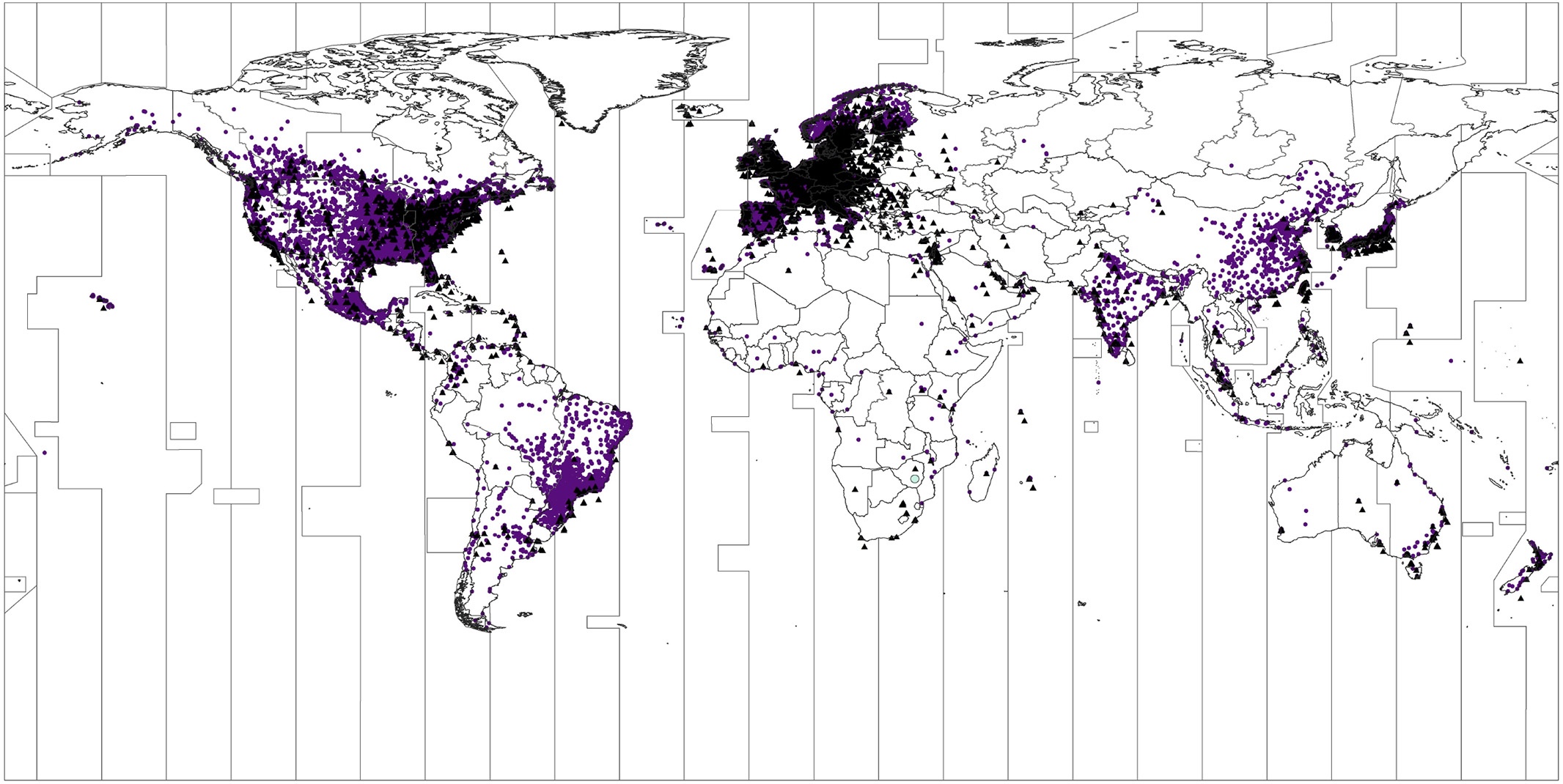
Using a global dataset of over 100,000 establishments belonging to more than 3,000 multinationals, I document a robust trade-off between geographic distance and knowledge intensity: subsidiaries engaged in more sophisticated activities tend to locate closer to headquarters. Crucially, this trade-off weakens significantly when there is greater overlap in working hours between the two locations.
To establish causality, I implement a novel regression discontinuity design exploiting discrete changes across time zone boundaries. Subsidiaries located just across a time zone line closer to headquarters—gaining one extra hour of working-hours overlap—are active in industries roughly 1% higher on the knowledge intensity scale. This effect cannot be explained by shipping costs alone, suggesting that real-time communication for management, coordination, and problem-solving is essential for knowledge-intensive activities.
Related Research
The Impact of Immigrant Talent on Global Product Strategy
Management Science, 2026
Measuring Knowledge Intensity in Manufacturing Industries: A New Approach
Applied Economics Letters, 2019
Fool's Gold: The Impact of Venezuelan Currency Devaluations on Multinational Stock Prices
Economía (Journal of LACEA), 2018