Diasporas and Economic Development: A Review of the Evidence and Policy
Dany Bahar
Key Findings
- Remittances to low- and middle-income countries reached $529 billion in 2018, exceeding foreign direct investment flows
- Countries with larger diasporas show higher levels of exports and FDI inflows, consistent with migrants reducing bilateral transaction costs
- High-skilled emigrants drive knowledge transfer effects—countries are more likely to develop export competitiveness in products where their diaspora has expertise
- Returning refugees and migrants can transform industries: Yugoslav refugees who worked in German manufacturing boosted exports in those same industries upon return
About This Research
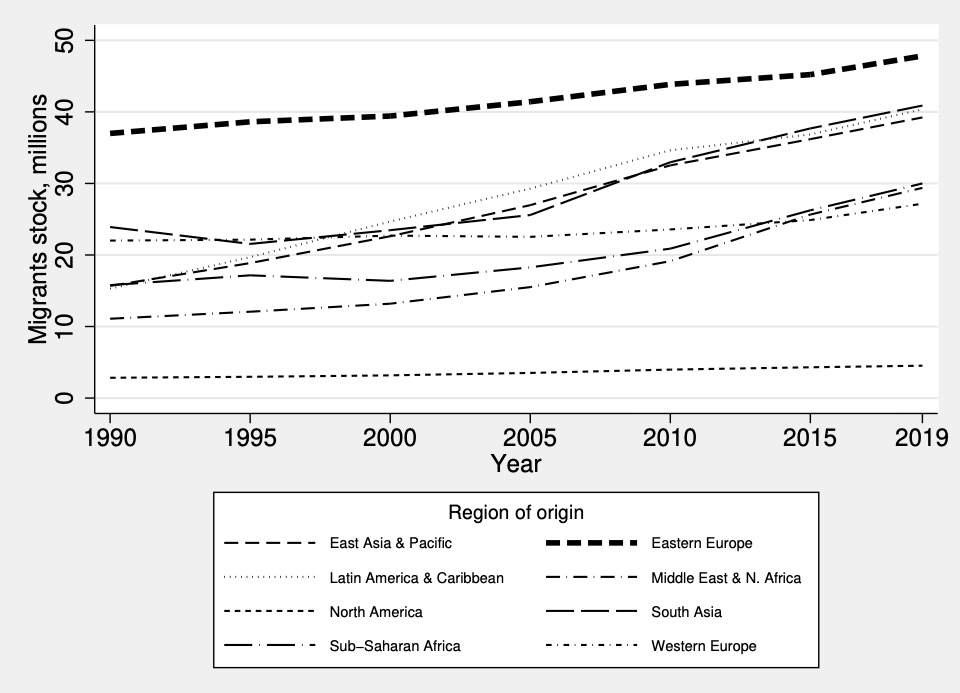
With over 266 million people living outside their country of birth, diasporas represent a largely untapped resource for economic development. This paper reviews the growing body of evidence on how emigrants can benefit their home countries and discusses policy options for leveraging this 'diaspora capital.'
The review examines three main channels through which diasporas foster development. First, remittances—now exceeding $500 billion annually to low- and middle-income countries—provide direct income support to households while contributing to consumption, investment, and tax revenues. Second, migrants create business networks that reduce transaction costs, facilitating bilateral trade and foreign direct investment between host and home countries. Third, and perhaps most importantly, diasporas serve as conduits for knowledge diffusion, transferring skills, technologies, and know-how back home.
The paper also discusses policy innovations for engaging diasporas, from matching programs for remittance-funded public investments (like Mexico's 'Tres Por Uno' program) to fiscal incentives for return migration. The evidence suggests that even small numbers of returning migrants or diaspora connections can generate significant productivity gains—challenging the traditional 'brain drain' narrative and pointing toward a more dynamic understanding of how migration shapes economic development.
Related Research
The Impact of Immigrant Talent on Global Product Strategy
Management Science, 2026
Legalizing Entrepreneurship: Evidence from a Formula Instrument Design
The Economic Journal, 2026
Sanctions on Venezuela Are Not Driving Migration to the Southwest Border: An Empirical Assessment
Economía LACEA Journal, 2026