Protecting the Vulnerable: How Migrant Regularization Reduces Crime and Empowers Women
Ana María Ibáñezⓡ, Sandra V. Rozoⓡ, Dany Baharⓡ, María José Urbina
Key Findings
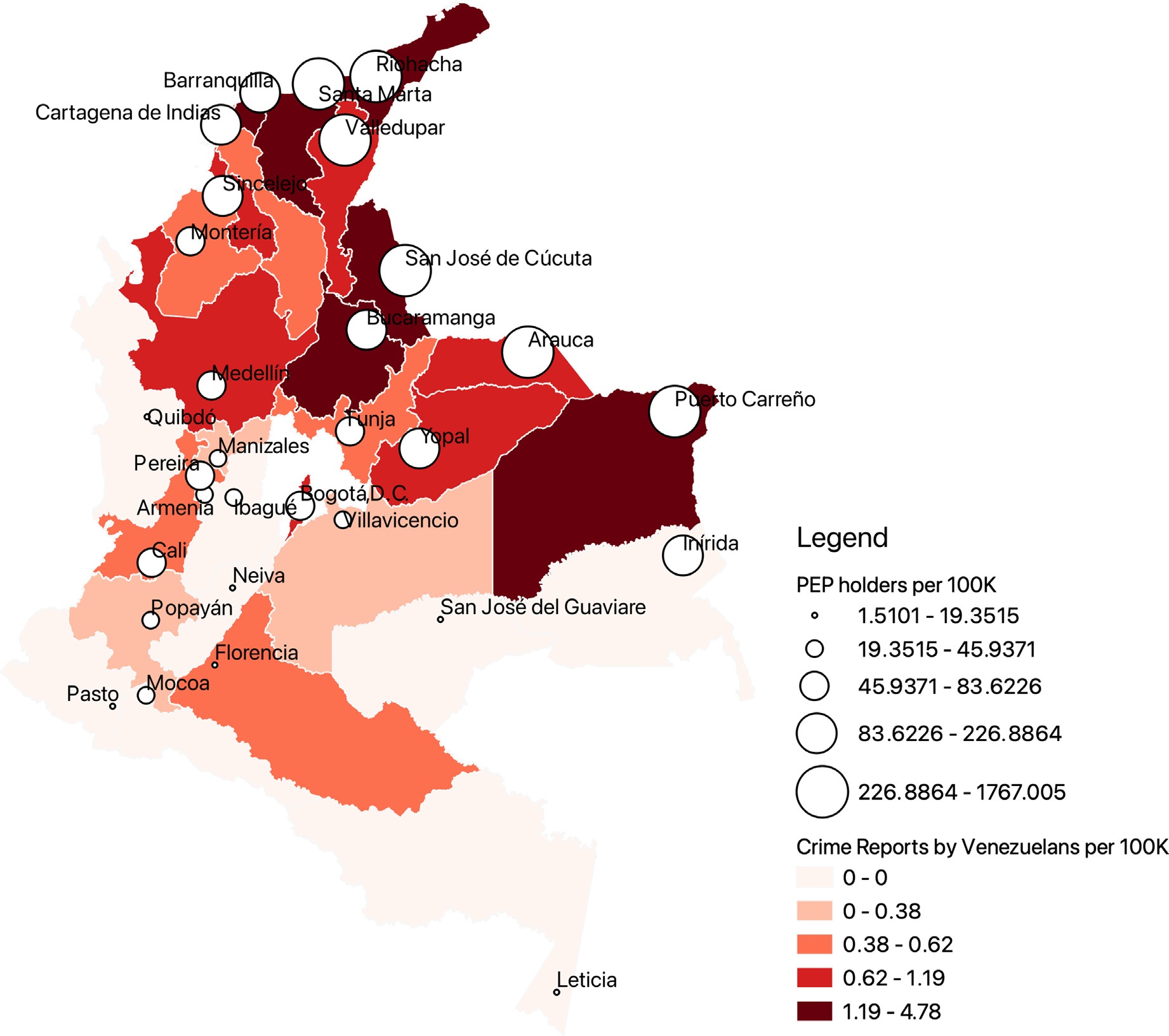
- Cities with twice as many PEP holders experienced 25% more crime reports by Venezuelan migrants, driven entirely by female victims
- Reports of sexual crimes increased by 40% and domestic violence by 70% in high-uptake areas—reflecting empowerment to report, not increased violence
- Crimes committed by Venezuelan migrants decreased following regularization due to better enforcement and improved economic opportunities
- Female PEP holders reported crimes to police at rates 25% higher than women without legal status
About This Research
Does granting legal status to undocumented migrants affect crime? This paper studies Colombia's PEP regularization program, which provided temporary work permits and access to social services to over 281,000 Venezuelan forced migrants—offering a unique natural experiment to examine this question.
We find two key results. First, cities with higher program take-up saw increased crime reports by female Venezuelan migrants, particularly for domestic violence and sexual crimes. This suggests the program empowered vulnerable women to report abuses without fear of deportation. Survey data confirms that female PEP holders filed complaints at significantly higher rates than those without legal status.
Second, the program led to a reduction in crimes committed by Venezuelans and in total crime reports by Colombian natives. Regularization increased the legal costs of committing crimes (undocumented migrants were previously difficult to prosecute due to legislative loopholes) while also improving migrants' economic conditions, reducing incentives for criminal behavior.
Related Research
The Impact of Immigrant Talent on Global Product Strategy
Management Science, 2026
Legalizing Entrepreneurship: Evidence from a Formula Instrument Design
The Economic Journal, 2026
Sanctions on Venezuela Are Not Driving Migration to the Southwest Border: An Empirical Assessment
Economía LACEA Journal, 2026